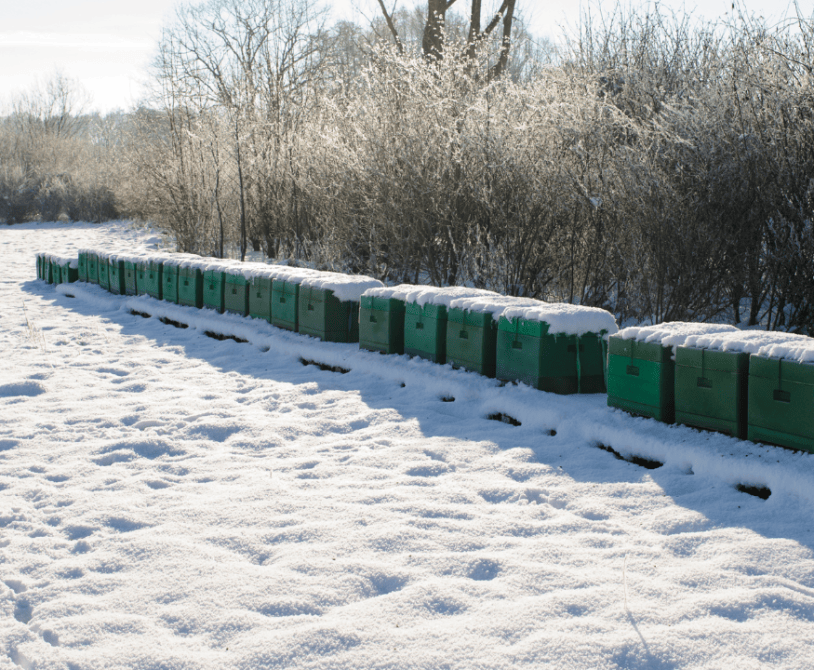

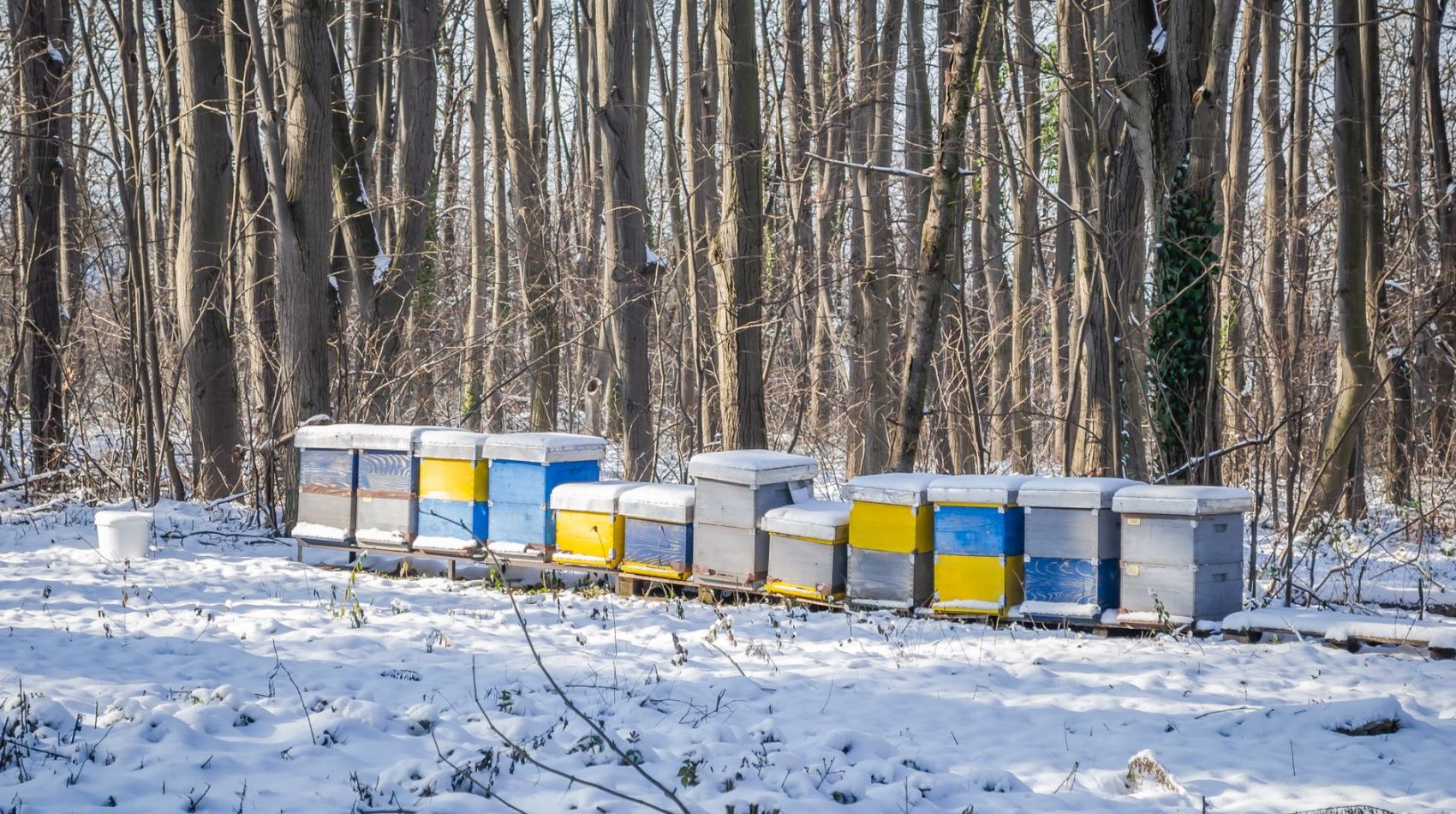
To someone walking past a beehive in winter, it can look as though nothing is happening at all. There are no busy foragers flying in and out, no lines of bees at flowering plants, and very little visible activity around the entrance.
But inside the hive, thousands of bees are working together to survive one of the most challenging periods of the year.
Winter is not a time of hibernation for honey bees. Unlike some insects that become dormant during cold weather, honey bees remain active throughout winter. Their survival depends on cooperation, food stores, and a remarkable ability to regulate temperature within the hive.
At the centre of winter life is the winter cluster. As temperatures drop, worker bees gather tightly together around the queen, forming a living ball of bees. The outer layer acts as insulation, protecting the bees in the middle from the cold. Bees constantly move within the cluster, taking turns between the warmer centre and cooler outer edges.
By vibrating their flight muscles, bees generate heat without actually flying. This allows the cluster to maintain a stable temperature even when conditions outside are cold and frosty. The core of the cluster can remain surprisingly warm despite freezing temperatures beyond the hive walls.
The queen continues to play an important role during winter, although her activity changes significantly. Depending on climate and local conditions, she may dramatically reduce egg laying or stop altogether for short periods. This reduction in brood production helps conserve resources when nectar and pollen are scarce.
Winter bees are also different from the bees we see during the busy spring and summer months. Summer worker bees often live only a few weeks because of the intense demands of foraging and hive work. Winter bees, however, are physiologically different. They are designed to live for several months, carrying the colony through the colder season until spring arrives.
One of the colony’s greatest challenges during winter is managing food reserves. Because bees cannot regularly forage for nectar, they rely almost entirely on the honey they stored during the warmer months. A strong colony with adequate honey stores can survive winter comfortably, while a colony that enters winter with insufficient food may struggle or starve before spring.
This is why beekeepers spend so much time assessing food reserves in autumn. The success of a colony in winter is often determined long before winter actually begins.
Although activity slows, the hive remains a highly organised and functioning society. Bees continue cleaning cells, caring for the queen, managing temperature, and responding to changes in weather conditions. On warmer winter days, you may even see bees leaving the hive for cleansing flights before quickly returning to the cluster.
Winter is also a critical time for monitoring one of the biggest challenges facing modern beekeeping: varroa mite. The arrival of varroa in Australia has changed the way beekeepers manage their colonies. While winter may appear to be a quiet season, it is actually one of the most important times to understand what is happening with varroa levels inside the hive.
Varroa mites reproduce inside capped brood cells, where they feed on developing bees and increase their population. During spring and summer, when brood production is high, mite numbers can grow rapidly. By the time obvious symptoms appear, significant damage may already have occurred.
Winter provides an opportunity to assess where colonies stand before the spring build-up begins. Colonies with low mite levels entering spring are far better positioned to take advantage of increasing nectar flows and expanding brood nests. Colonies carrying high mite loads, on the other hand, may struggle just when they should be growing strongest.
Regular monitoring is essential. Methods such as alcohol washes, and sticky board counts help provide an indication of mite levels within a colony. Monitoring allows beekeepers to make informed decisions rather than relying on guesswork.
For Australian beekeepers, winter is also a good time to review their varroa management plan, especially as many areas do not have a brood break that can be critical for mite counts to drop. Treatment options, monitoring schedules, and record keeping should all be considered before spring arrives. Waiting until mites become visible or colonies show signs of stress can leave beekeepers constantly playing catch-up. The goal is not simply to react to varroa, but to stay ahead of it.
As temperatures begin to rise and brood production increases in late winter and early spring, mite populations can increase quickly alongside the growing bee population. Colonies that start spring healthy and with well-managed mite levels have a much better chance of building into strong, productive hives.
Perhaps the most fascinating thing about a winter beehive is how much is happening despite how little we can see. From the outside, the hive appears quiet and still. Inside, thousands of bees are working together to survive, conserve resources, protect their queen, and prepare for the return of warmer weather.
Winter may seem like a season of rest, but for honey bees it is really a season of endurance. Every cluster, every stored frame of honey, and every carefully managed colony is laying the foundation for the busy months ahead.
By understanding what happens inside the hive during winter, beekeepers can better appreciate the remarkable resilience of honey bees and make informed decisions that help their colonies thrive when spring finally arrives.